APC to adopt direct primary to pick candidate for Osun governorship election

The winner of BBNaija 2018, Miracle who was promised a cash gift and land by the Imo State Governor shortly after the end of the show, has finally received it.

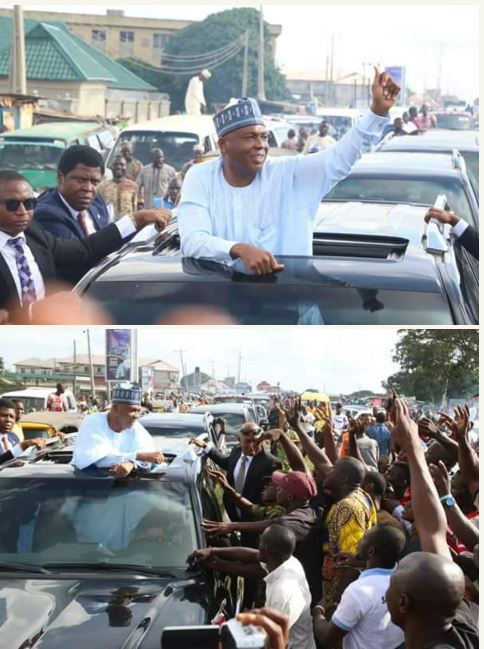
Electric Atmosphere As Bukola Saraki Returns Home To Ilorin

Senate President Bukola Saraki was given a rousing welcome in Ilorin, Kwara State as embarks on a courtesy visit.

#BBNaija Winner, Miracle Receives $25,000 Cash Gift From Gov. Okorocha In Owerri (Photos)

The winner of BBNaija 2018, Miracle who was promised a cash gift and land by the Imo State Governor shortly after the end of the show, has finally received it.

Kwara gov. seeks tenure extension for Offa council chairman, councillors

Gov. Abdulfatah Ahmed of Kwara on Tuesday requested the State House of Assembly to approve the extension of the tenure of the Chairman and councillors of Offa Local Government Council.

Sport News

Thierry Henry Thierry Henry is quitting his job as a pundit for Sky Sports in order to focus on a career in management.

Wednesday, August 1, 2018

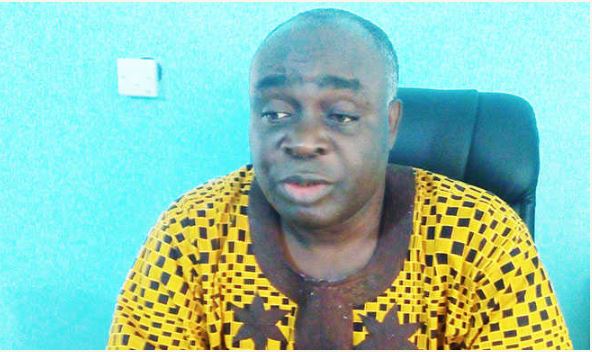
Kwara State PDP Chairman, Iyiola Oyedepo Reportedly Decamps To APC


Akogun Oyedepo 

The chairman of Kwara State PDP Akogun Oyedepo revealed live on RoyalFM951 that he alongside other members of the Peoples Democratic Party are moving to the All Progressives Congress following the return of Senate President, Bukola Saraki and Kwara State governor, Abdulfatah Ahmed.

He announced his defection on Wednesday morning live on radio less than a day after the Senate president and Governor Abdul Fatah Ahmad resigned from the APC.

Recall that the former chieftain of the APC Akogun Iyiola Oyedepo in 2014 cross-carpeted to the PDP, when the Senate President Dr Bukola Saraki moved to the APC where he remained for almost four years.

Source


Share:

Fear in Zamfara as bandits ramp up attacks —Amnesty Int’l

Insecurity is escalating in Zamfara State, with daily killings and kidnappings by armed bandits leaving villagers in constant fear of attack, Amnesty International said, yesterday.

File: Amnesty International

“The authorities’ failure to act has left villagers in Zamfara at the mercy of armed bandits, who have killed hundreds of people over the course of two bloody years,” said Osai Ojigho, Director of Amnesty International, Nigeria.

He added: “When we visited the region, villagers told us that they had pleaded with the government to help them after receiving warning letters from the bandits ahead of attacks, but had received no protection.

“Nigerian authorities have repeatedly claimed to be tackling the situation, but the mounting death toll tells a different story.

“On Friday, July 27, 18 villages in the Mashema, Kwashabawa and Birane districts of Zurmi Local Government Area of Zamfara State were attacked, leaving at least 42 people dead.

“At least 18,000 residents of the affected villages, who were displaced over the weekend are now taking refuge at various locations in the local government headquarters.

“The following day, a further 15 people were kidnapped in Maradun Local Government Area.

“On Saturday, July 28, President Muhammadu Buhari announced the deployment of 1,000 troops to Zamfara.

“This is the third time since November 2017 that the authorities have deployed the military in response to attacks, but villagers told Amnesty International that this has not translated into protection for remote, vulnerable communities.

“Previous military interventions have failed to end the killings, especially in rural areas of Zamfara.

“At least 371 people have been killed in Zamfara in 2018 alone, and at least 238 of these killings took place after the deployment of the Nigerian Air Force.

“The government is still neglecting the most vulnerable communities in this region,” Ojigho added.

Source:


Share:

Zimbabwe’s Ruling Party ZANU-PF Wins Most Seats In Parliament


Election officials tally presidential candidates ballots during counting operations for Zimbabwe’s general election at the David Livingston Primary school in central Harare on July 30, 2018. 

MARCO LONGARI / AFP

Zimbabwe’s ruling ZANU-PF party won the most seats in parliament, official results showed Wednesday, as the count continued in the presidential race and the opposition MDC cried foul, alleging widespread fraud.

EU observers are due to give their preliminary report on Zimbabwe’s election later Wednesday, two days after the vote — the first ballot since Robert Mugabe was ousted after 37 years in power.

With elections under Mugabe marred by fraud and often deadly violence, his successor President Emmerson Mnangagwa, 75, promised a free and fair vote and invited international observers.

“The Zimbabwe Electoral Commission (ZEC) has announced a further 50 National Assembly results, bringing the total so far to 153. Of the 153, ZANU-PF has won 110 seats, while the MDC Alliance got 41 seats,” ZBC state media reported.

There are 210 seats in the national assembly lower house.

MDC did not immediately respond to the parliamentary results but earlier on Wednesday party leader and presidential contender Nelson Chamisa, 40, said the presidential results were being faked.

“ZEC seeks to… reverse the people’s presidential election victory. The strategy is meant to prepare Zim mentally to accept fake presidential results,” he tweeted.

“We won the popular vote and will defend it!”

If no presidential candidate wins at least 50 percent of the ballots cast in the first round, a run-off vote is scheduled for September 8.

On Wednesday, observers from the Southern African Development Community and the African Union will also deliver reports on the polls.

Government warning 

Opposition Movement for Democratic Change (MDC) supporters started celebrating Tuesday after a senior party official said that the party was sure Chamisa had won and that if he was not declared victorious, it would “announce our own results”.

That apparently prompted Home Affairs Minister Obert Mpofu to warn that anyone illegally announcing results would “provoke the wrath of the law and risk being sent to jail”.

The electoral commission has warned that results of the presidential first round may not be known until Friday or even Saturday and would not be released until tallies were received from all 10,985 polling stations.

“We are nowhere near where we expected to be, so I can quite see us going into the fifth day which is allowed by law — but we are working flat-out,” commission chairwoman Priscilla Chigumba told journalists in the capital.

Chigumba, a high court judge, has flatly denied allegations of bias and strongly disputed accusations of rigging.

Analysts have said it was unclear whether the country’s generals, who ousted Mugabe and ushered Mnangagwa into office, would allow an MDC victory.

“There is no way that ZANU-PF will accept an MDC victory. We know that people will be beaten — especially in rural areas, like what they were doing before,” said Harare shop worker Tracy Kubara, 26.

Mugabe, 94, who ruled for nearly four decades, voted in Harare alongside his wife Grace.

It followed a surprise press conference at which he stunned observers and called for voters to reject ZANU-PF, his former party.

Mnangagwa, Mugabe’s former right-hand man, was the clear election front-runner, benefitting from tacit military support and control of state resources.

But Chamisa, a lawyer and pastor who performed strongly on the campaign trail, sought to tap into the youth and urban vote.

He has repeatedly accused ZANU-PF and election authorities of trying to use a flawed electoral register and fixed ballot papers to steal the election.

Whoever wins will face a mass unemployment crisis and an economy shattered by the Mugabe-era seizure of white-owned farms, the collapse of agriculture, hyperinflation and an exodus of investment.

AFP


Source


Share:

APC dep guber candidate: Osun West has it!

The All Progressives Congress, APC, in Osun State has filed in a dummy as running mate to the party’s candidate, Gboyega Oyetola as the party yesterday assured that the office remained zoned to Osun West Senatorial District.

Alhaji Gboyega Oyetola

Alhaji Gboyega Oyetola

The party has also asked its members and supporters not to panic over the issue of who will emerge as the deputy governor as it yesterday said that the issue is not yet finalised.

A statement by the party’s Directorate of Publicity, Research and Strategy, Kunle Oyatomi, said ‘’the decision to pick a candidate for that position from Osun West has not changed and will not change.’’ The party explained that the name originally forwarded to the Independent National Electoral Commission for the deputy, was a provisional one to complete the governorship flag bearer’s name submission which was mandatory.

As at the time that submission was made, a final decision on who will be the deputy from Osun West had not been taken.

‘’By provision of the law, we still have a three-week window to replace whatever name had been originally submitted with our flag bearer’s.

‘’That gives the party a breathing space to arrive at a   consensus on who should represent Osun West as the deputy governor’’, the party explained. “There is no cause for panic’’ the APC assured, adding that, ‘’party members should disregard the rumours making the rounds that the West has been betrayed.

“Rest assured that the deputy governorship candidate that will be on the APC ticket for the September election will irrevocably be from Osun West”

Politics:


Share:

Rural schools must be ICT equipped –Ashafa

Senator, representing La-gos East Senatorial District, Mr Gbenga Ashafa has stressed the need for the development of Information Communication Technology, ICT, in Nigeria, even as he advocated proper equipment of mostly rural schools with ICT tools to bridge digital divide between the urban and rural students.

Ashafa made the case at a hand-over ceremony of furniture and computers he donated to administrators of Orimedu Community High School, Orimedu, Ibeju-Lekki, as well as other schools located within the district.

Sen. Gbenga Ashafa

Ashafa said he decided to give the items because the world is going fully digital and leaving rural schools out of it would draw the country’s wheel of progress back in future.

His words: “If we all take a look at how the world is evolving today, we would see that Information Communication Technology, ICT, is immensely influencing the society and education is not left out of it.

“I cannot overemphasize the need for ICT in Nigerian secondary schools. The ability to use computers effectively has become an essential part of everyone’s education.

“In Nigeria of today, if we take a look at our primary and secondary schools, we would notice that till date, the chalk board and textbooks still dominate classroom activities. There is a need for a change in the status quo.

“With the high demand for computer literacy especially by employers, it has become necessary for us to ensure that right from primary school to secondary school, our children have access to computers for quick development and enhancement of their ICT skills.

Source


Share:

Transfer: Luka Modric to join Cristiano Ronaldo in Serie A


Real Madrid’s veteran midfielder, Luka Modric is set to join Cristiano Ronaldo in the Italian Serie A.

The player has entered talks with Italian giants Inter Milan over a stunning summer exit from Real Madrid.

The Croatia international has been a vital in Real Madrid’s midfield as they lifted the Champions League title in each of the past three seasons.

There have been some major changes at Real Madrid with manager Zinedine Zidane and star attacker Cristiano Ronaldo leaving the club.

And now another key figure is on the verge of an exit.

Italian newspaper, Di Marzio, reports that Modric’s agents have been contacted by Inter Milan chiefs regarding a move.

Source:


Share:

NASS and the retrogressive Media Bill

DEMOCRACY requires an active media to thrive. This is because the parameters that constitute good governance, which is a common feature of a vibrant civil rule, can be measured by the level of accountability, transparency and rule of law that exist in a country. Ordinarily, it is a difficult task for many governments to appraise itself for good or bad. Hence, the importance of the media in serving as the prism to review the performance of democratic governance. An attempt to stifle the media in carrying out these functions would bring about dire consequences for good governance.

Senate

A case under contention is the Nigerian Press Council Amendment Bill, which has already been debated at the public hearing stage. The bill seeks to regulate journalism practice by creating a statutory body to arbitrate between the media and the public. It is on this premise that the media can be compromised, that Nigerians are angered with the new media bill before the National Assembly and have  described it  as retrogressive, unconstitutional and anti-people.

The main justification that promoters of the legislation are hinged on is that today, proliferation of the media is so severe that fake news and hate speech have dominated public spheres and pose national security problems. We daily read false stories, recycled information and outright falsehood, mostly in the social media which could trigger violence, enmity and hatred among the people. Ordinarily, any responsible government should be bothered about the flow of information, fostered under an atmosphere of peace, sanity and tranquility. This is more important now that the general elections are fast approaching. The media should, therefore, not be a weapon for creating chaos, disaffection and intimidation in the land. Logical, is this line of argument.

Beyond this thought, the introduction of the anti-media bill at this time is not only curious but apprehensive. It is suggestive of a deliberate plan to manipulate the media towards certain political advantage. It is also instructive to say that the action is sub judice since a suit on the subject-matter is still pending before the Supreme Court, which questions the rationale behind why the bill should have been drafted in the first instance. The lawmakers should have awaited the outcome of the court’s ruling without acting in contempt of the court.

It is because of this constitutional crisis that many people feel that the introduction of the bill is nothing, but a mere amalgamation of the obnoxious Public Officers Protection Against False Accusation Decree No. 4 of 1984 and Newspapers Registration Decree 43 of 1993, being brought back into our legal system through the back-door; the draconian laws that were promulgated during the totalitarian military rule in the country. It’s existence would criminalise journalism practice in Nigeria. Do we need this?

The answer is ‘no’. Already, there are several extant laws in the country that can tame the excesses of media practitioners. The birth of the imposed bill would make the Nigeria Press Council, NPC; a Federal Government agency, to usurp the powers of the courts by assuming extra-judicial powers in the course of carrying out its statutory duties. In addition, the bill is inconsistent with the provisions of Sections 22, 39 of the 1999 Nigerian Constitution (as amended) and Article 9 of the African Charter on Human and Peoples’ Rights (Ratification and Enforcement Act) No. 2 of 1983 to which Nigeria is a signatory and is also part of the country’s laws.

That the bill, through some of its other obnoxious provisions, intends to indoctrinate Nigerians, through the use and misuse of educational curricula in the training of journalists and usurp the powers of the regulatory bodies in the educational sector that are equipped and designed to teach courses in media and journalism such as the National Universities Commission, NUC, and the National Board for Technical Education, NBTE, that regulate the teaching and research in the fields of journalism, mass communication and similar courses in the universities, polytechnics, monotechnics and colleges of technology. This is unnecessary and a misplaced priority.

Nigeria should do this rightly. We should not take after countries that are not getting it right  in democratic practice and  press freedom. The United States of America, Great Britain, France and Canada can be said to be doing well in terms of free press. But many African and developing countries  still lag behind in creating room for media independence. Recently, the Egyptian parliament approved during a final reading, similar obnoxious bill that would allow government authorities to monitor social media users in the name of combatting ‘fake news’. Under the new law, people whose social media accounts have more than 5,000 followers are to be placed under the supervision of Egypt’s Supreme Council for Media Regulations.

The  bill, which had been backed by two thirds of the Egyptian parliament, would require the assent of President Abdel Fattah el-Sisi, before being ratified into law. This unwarranted censorship would encompass websites, blogs and personal accounts in Egypt. The council (similar to the NPC), would be authorised to suspend or block any personal account that publishes or  broadcasts fake news, or anything inciting that violates the law, or creates violence or hatred.

Article 29 of the bill states that journalists should be jailed pending trial, if found guilty of inciting violence or hatred or discrimination through their writings. Imprisonment before trial! Many journalists are currently behind bars in Egypt. Social media platforms such as Twitter and Facebook have become one of the last forums for public debate in Egypt since the 2013 ban on all gatherings without police approval. Over 500 websites have allegedly been either blocked or closed down while those who administer the websites have faced jail time or made to pay heavy fines.

We recall that Nigerians are more active in protecting the nation’s democracy at all cost. A similar and controversial bill failed to sail through the parliament in 2016, when the Frivolous Petitions Prohibition Bill (also known as the Social Media Bill) was being pushed for passage into law before it ‘died’ at the Senate plenary.

The bill was dropped during the celebration of the International Technology Day, an event that offered an opportunity  for users of the Internet and service providers to examine the impact of the social media on good governance. This is likely to be the same path the new legislation is bound to take going by criticisms that had trailed its incursion into our political lexicon.

Source


Share:

offa indigenes

Subscribe to Offa247 News Alert

Enter your email address:

Disqus for www-offa247news-blogspot-com